Episode 27 Overview, Guest Bio & Additional Resources
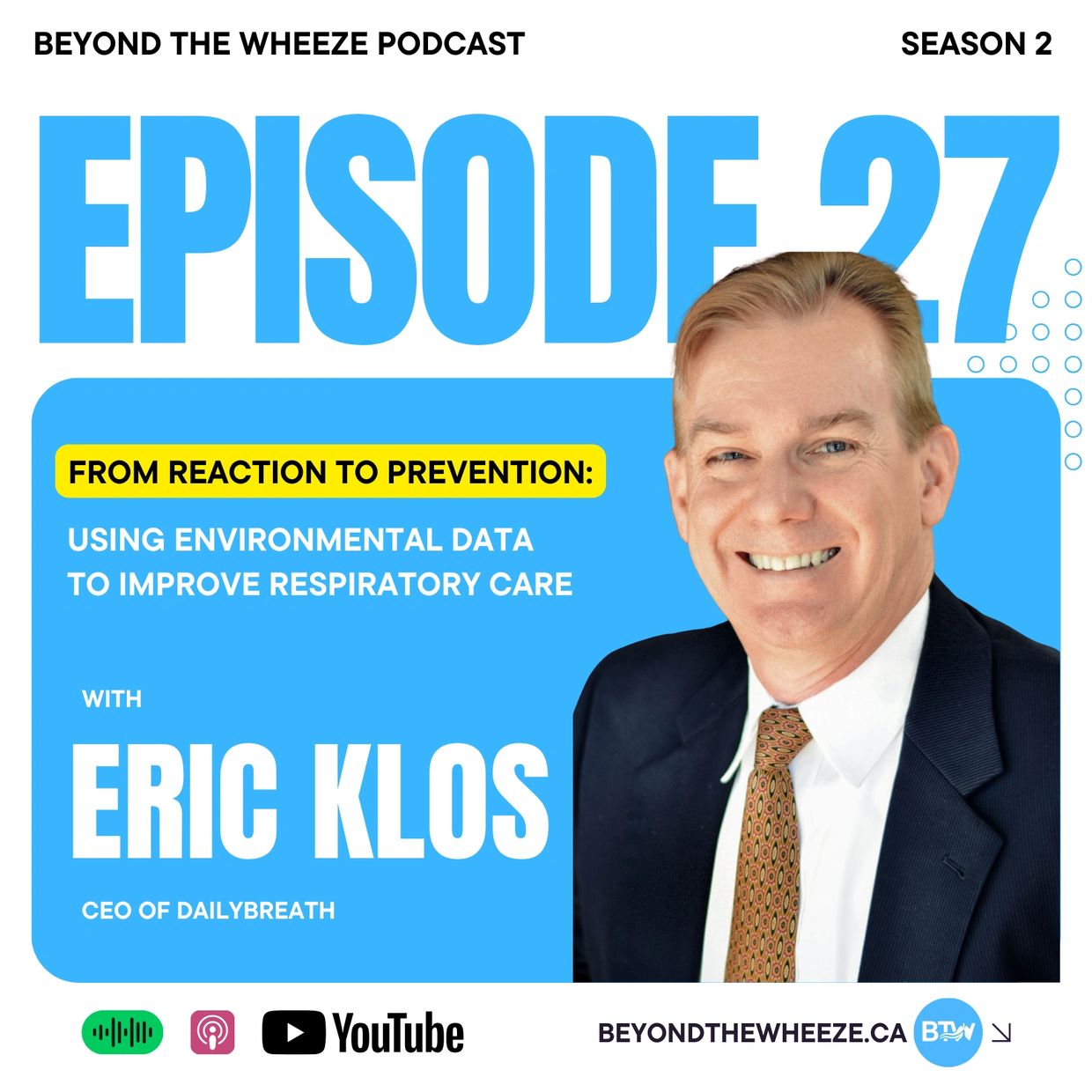
Eric Klos on Air Quality, Respiratory Health, and Environmental Exposure
In this episode of Beyond the Wheeze, I sit down with Eric Closs, Founder and CEO of Daily Breath, to explore the powerful (and often overlooked) relationship between outdoor air quality, environmental exposure, and respiratory health — especially asthma.
Eric explains how environmental conditions like air pollution, pollen, wildfire smoke, temperature shifts, and weather patterns can quietly increase risk, even before symptoms show up. Through Daily Breath, his mission is to help people anticipate and prevent attacks using personalized, real-time environmental data, rather than relying on generalized forecasts or reacting when it’s already too late.
He also shares the “light bulb” moment that sparked the creation of Daily Breath after witnessing his sister’s rheumatoid arthritis flare up due to weather changes. That experience revealed a major gap in modern healthcare: environmental triggers are real, measurable, and highly personal — yet they’re still often ignored in asthma care.
Our conversation goes beyond asthma alone, connecting environmental exposure to broader health outcomes like cardiovascular strain, the impact of cumulative exposure over time, and the need for localized, actionable information that helps people make smarter daily choices.

Environmental Health Intelligence for Respiratory Risk Prevention
Eric Klos is the Founder and CEO of DailyBreath, an environmental health intelligence platform designed to help people understand how the air they breathe impacts their respiratory symptoms and long-term health. With a background in health technology and years of work focused on environmental exposure, Eric has become a recognized voice in the growing conversation around air quality, asthma, allergies, COPD, and preventive care.
His work is grounded in a simple but powerful idea: environmental triggers are measurable, personal, and often predictable—yet they remain underused in traditional care. Through DailyBreath, Eric helps individuals identify patterns between pollutants, allergens, weather conditions, and symptom flare-ups, empowering people to take action before symptoms escalate. His approach combines education, real-time exposure awareness, and personalized forecasting to reduce risk and support better day-to-day respiratory management.
Turning Real-Time Air Data into Personalized, Actionable Insight
DailyBreath provides location-specific environmental insights to help users anticipate and reduce exposure-related risk—rather than reacting after a flare begins. The platform focuses on practical tools people can actually use: tracking symptoms, understanding individualized triggers, and creating a personalized exposure risk forecast based on real conditions in a user’s community.
Eric’s mission extends beyond symptom control. He advocates for a more modern view of respiratory wellness—one that recognizes the cumulative effects of air pollution and environmental exposure over time. By linking data to lived experience, he aims to close a major gap in respiratory care: helping people understand what’s in the air, how it affects them, and what steps they can take today to protect their lungs and overall wellbeing.